
Earlier this week, the U.S. 30y treasury yield hit the highest level since 2007, equities pared back some gains, and the dollar softened.
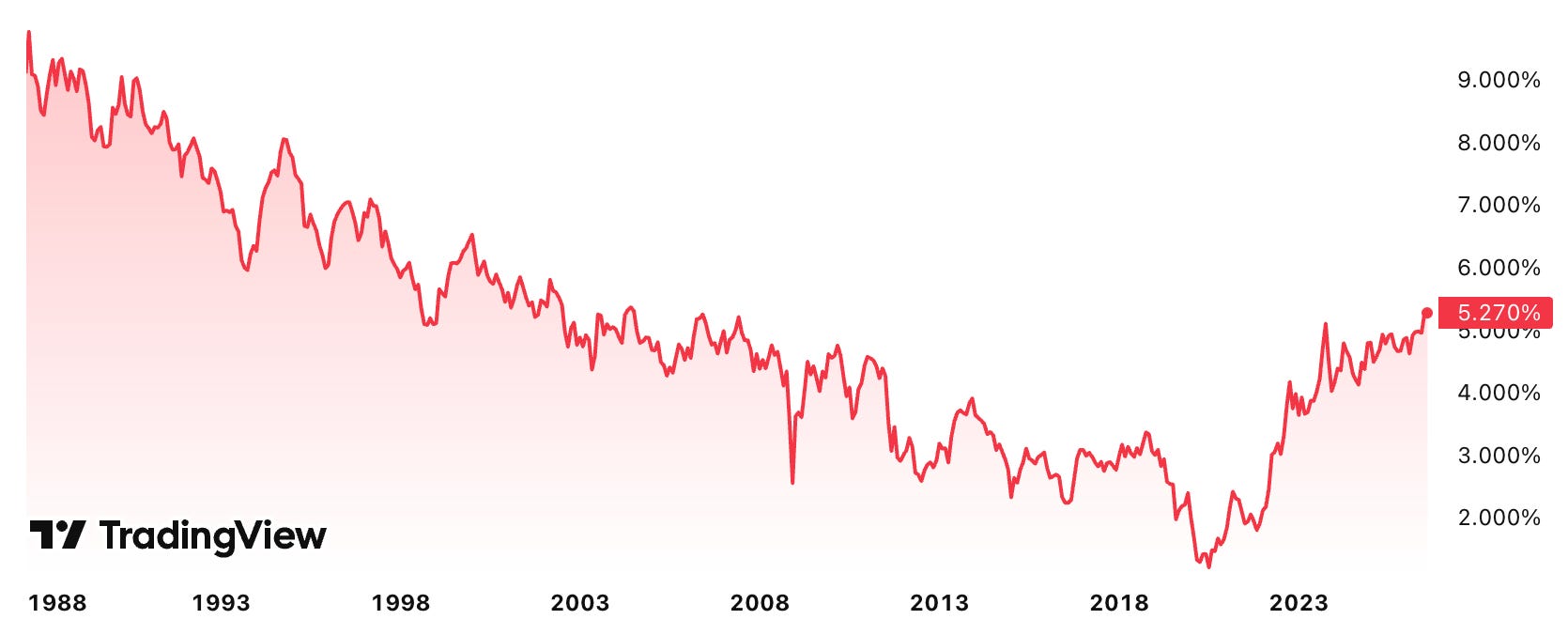
Treasury Secretary Bessent then announced on Wednesday that the Treasury will at least double the size of its buybacks while targeting long-end Treasuries (10y+ maturities). The dollar fell more, equities seemed to stabilize, and long-end yields dropped.
Is this the solution we’ve been waiting for? Is this just a temporary patch? To answer these questions we need to first analyze how we got here in the first place.
While the Fed can cut and hike short-term interest rates, they have less control over what happens with longer term rates.
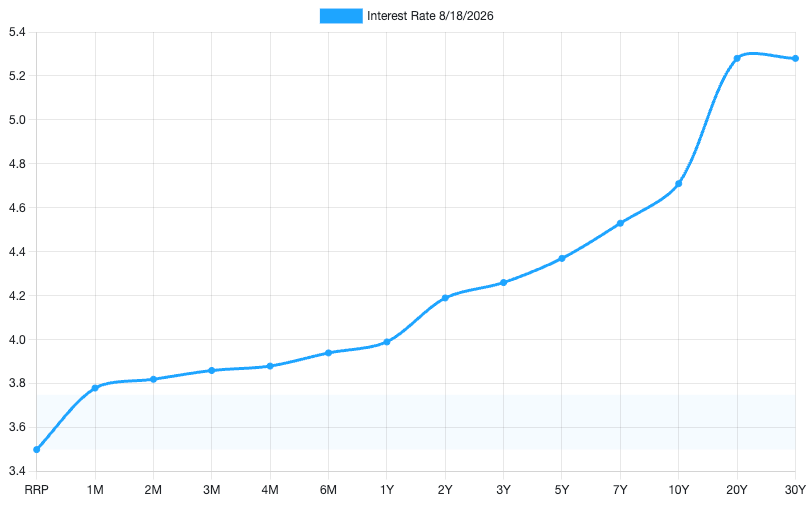
If you fail to respect what’s going on in the long end, you won’t last long. And no one wants to end up in a Truss situation.
Why have long-end yields been rising?
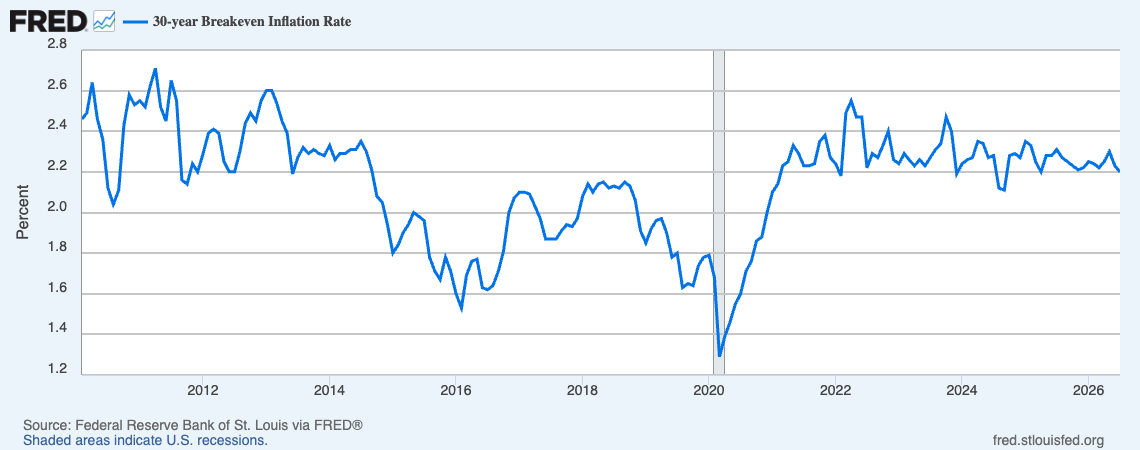
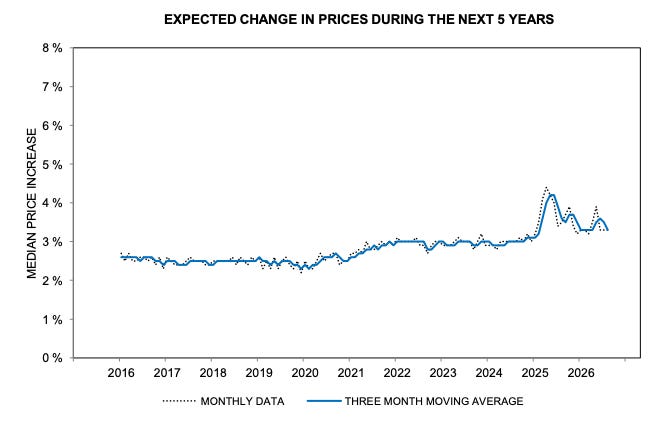
The initial instinct is that inflation worries have been driving bond yields higher. But, that doesn’t appear to be the case.
Inflation expectations can be observed in the market and in the University of Michigan Survey of Consumers. Both of these have been relatively stable so far - no sign of inflation expectations de-anchoring.
Baked into these longer term rates are also growth expectations along with factors like regulation, how much the Treasury needs to borrow to fund the deficit, and demand from insurers and pension funds both at home and abroad.
We haven’t had any recent developments on the regulatory side so this brings us next to the deficit.
Funding For Me, But Not For Thee
In a world where politicians are happy to spend close to a billion dollars to build a ballroom, the U.S. budget deficit continues to grow. That deficit needs to continually and increasingly be funded by debt and the composition of that debt issuance is determined by the Treasury department.
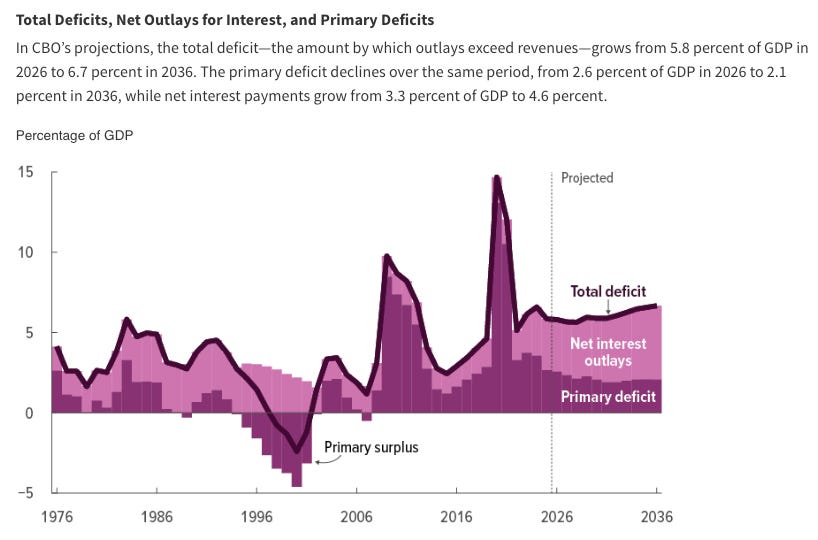
TBAC, which is the committee that advises the Treasury on its debt issuance, projects close to a $1.5 trillion shortfall next year that Treasury Secretary Bessent will need to ramp up debt issuance to address.
The Treasury can choose what mix of debt it wants to issue - T-bills, 5y bonds, 30y bonds, etc. Bessent will naturally aim to keep issuing a high percentage of T-bills. Favoring short-term debt like bills reduces the duration impact of issuance, which helps reduce the pressure on long-end yields.
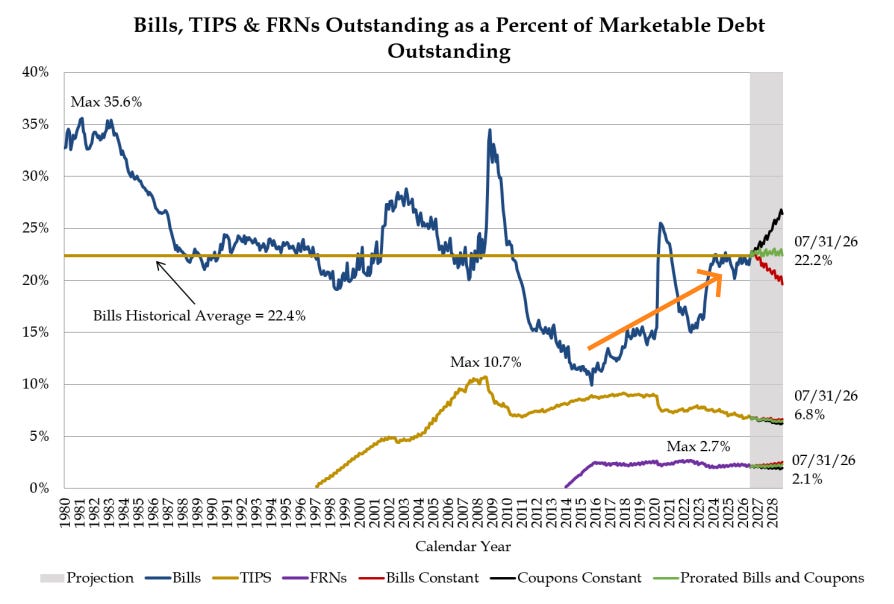
Ironically, this high allocation of issuance to bills is something that Bessent criticized Yellen for as he viewed it as a de-facto form of monetary policy easing. And I’d agree. But if Bessent were to depart from this trend, long-term Treasury yields would likely be noticeably higher.
But, it’s not as simple as just issuing a higher and higher percentage of bills. The money that gets drawn towards bills has to come from somewhere else - bank reserves, TGA, or RRP.
Post-GFC we lived in a world of ample reserves due to Quantitative Easing (QE). The ON RRP facility was created to act as the floor on the Federal Funds rate by creating a home for these excess reserves (via MMFs).
Naturally, bills compete with the RRP facility for reserves. And as bills issuance has trended higher along with ongoing Quantitative Tightening (QT), the RRP facility has now been completely drawn down.
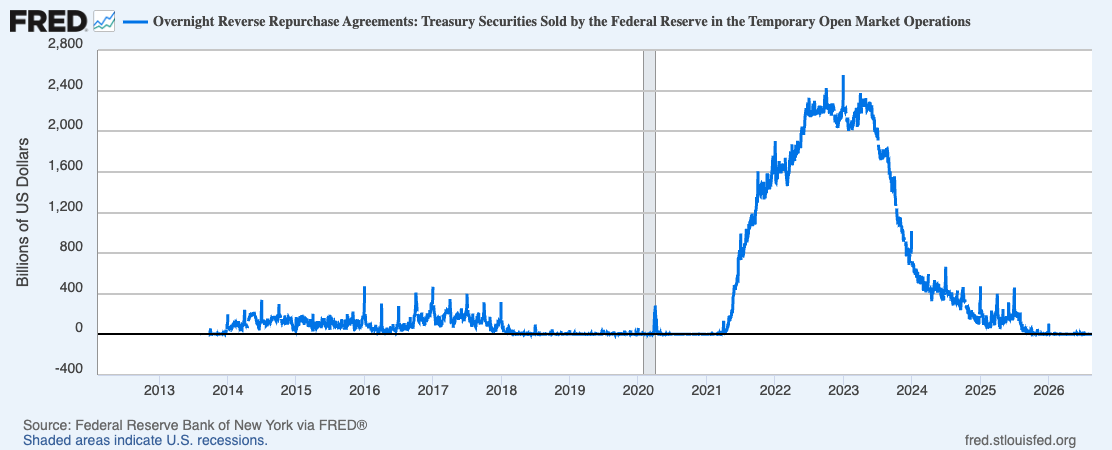
Not too surprisingly, the draining of the RRP coincided with the Fed ending QT in December 2025 as funding stress signs were seen going into Q4 2025. Part of this stress was due to the aggressive build up in the TGA in H2 2025 (a buildup in the TGA further drains reserves).
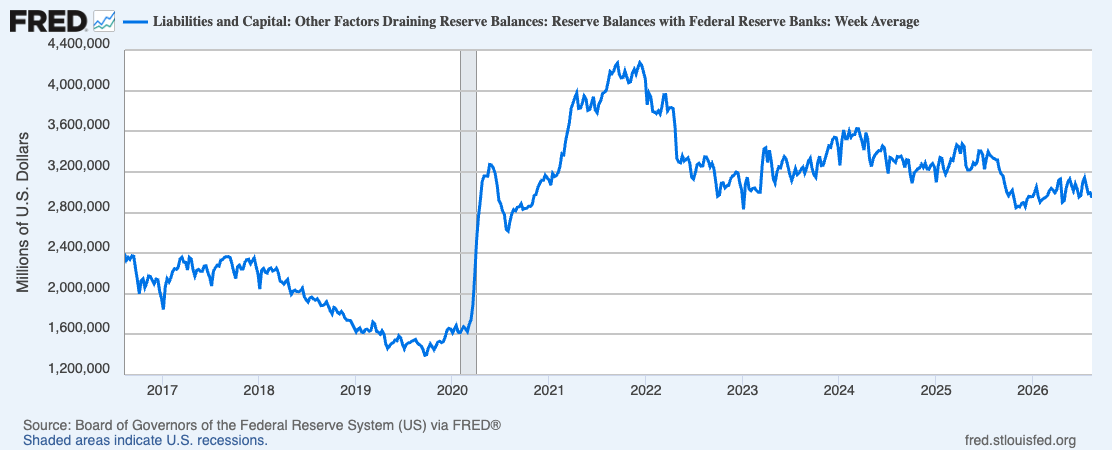
The banking system needs a certain level of reserves in order to operate smoothly. It’s not clear what this level is though and it changes through different market cycles and conditions. Waller had aptly pointed to 10 to 11% of GDP as the approximate endpoint for draining reserves but estimates range from anywhere as low as 7% to over 13% of GDP. Reserves currently sit around $3 trillion, roughly 10% of GDP.
Quietly in 2024, Yellen, as Treasury Secretary, started up a Treasury buyback program designed to give liquidity support to off-the-run Treasuries - so you have the Treasury running buybacks while simultaneously the Fed is running off the balance sheet via QT. These buybacks have sat around $20bn per quarter until the announcement today, but we’ll come back to this.
At roughly the same time QT ended, the Fed began buying tens of billions of dollars of Treasury bills via Reserve Management Purchases (RMPs). While this can sound a lot like QE, the difference comes down to the intent. QE aims to push down long-term yields and ease financial conditions by removing duration from the market. RMPs are sized to match the organic growth in the Fed's liabilities so that reserves stay ample rather than stimulate.
Duration Demand
Japanese bond yields are hitting 30-year highs and the yield curve is massively steepening following a long period of Yield Curve Control (YCC).
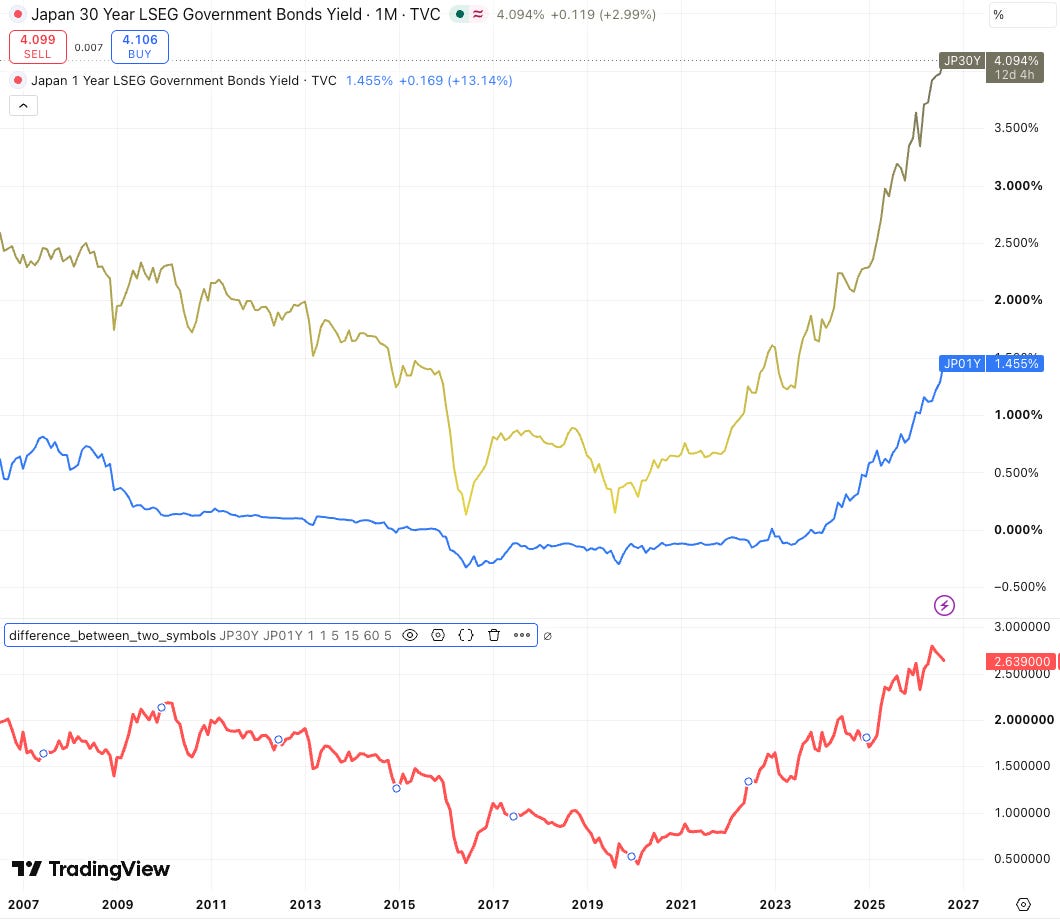
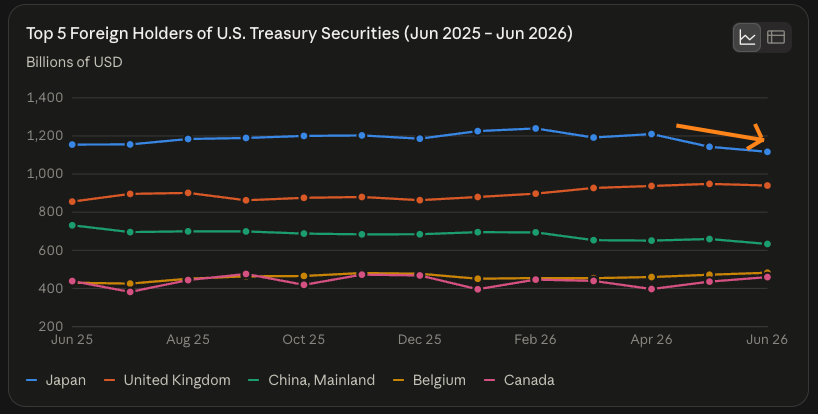
Japan is the largest foreign holder of US government debt. As Japanese yields rise, they become more attractive to Japanese institutions which points to less demand for US debt going forward and we have seen Japan reducing its Treasury position over the past few months.
The AI buildout is also supplying an ever increasing amount of long-term debt which competes for funds with long-end Treasuries.
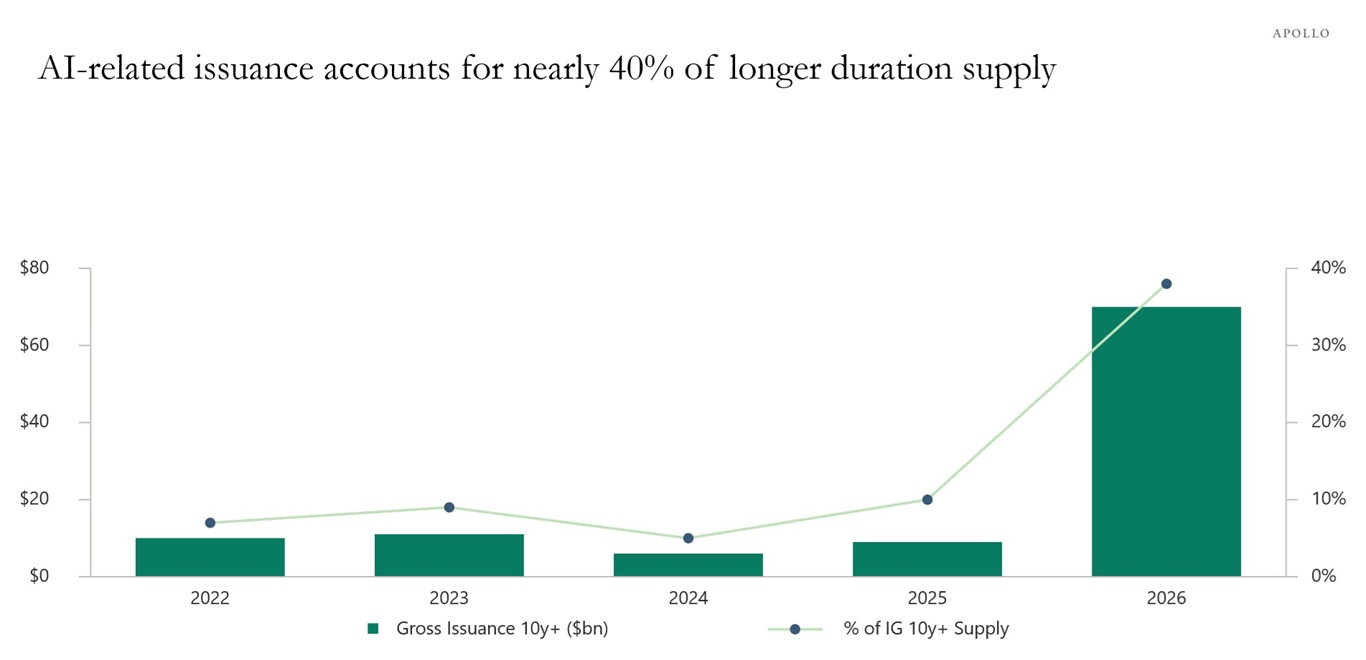
Dealer research shows that Hyperscaler IG bond issuance is expected to quadruple from 2025 to 2027. We’ve had “nearly $500 billion of AI-related debt issuance so far in 2026”. AI-related debt is now ~40% of longer-duration IG supply. Before the (hopeful) profits arrive, the AI buildout needs to continually be funded by debt issuance and equity dilution.
Bessent Bends
Today, Bessent announced that he is at least doubling Treasury buybacks in the long-end (10yr+ maturities) going from a $2 billion maximum per buyback to at least $4 billion effective from September 9th through November 4th.
While the amount is fairly small in the context of the size of the Treasury market, the intent is clear. The powers that be are aware of and concerned about rising yields and are willing to act. Previously, we even saw that Trump would soften Iran rhetoric as we saw long-end bond yields spike though we haven’t seen that dynamic playing out recently.
What we didn’t mention earlier when speaking about buybacks is that they’re funded by new debt issuance. And of course if you’re specifically targeting buying long-end bonds, you’re not going to target the long-end for issuance - which leaves us again with more bills issuance.
What we’re seeing is the Treasury’s first solo attempt at Operation Twist, America’s version of YCC. You may recall this term from 2011 under Bernanke when the Fed started to sell/run off short-dated Treasuries and reinvested proceeds into the long-end to bring long-term yields down. Slightly different flavor but the same principle.
As Bessent pointed out with Yellen, using policy to lower long-end yields is de facto easing financial conditions - and you can see it in the initial market reaction: equities up, dollar down, yields down. However, easier conditions do not necessarily mean easy conditions.
What Bessent is doing is playing a dangerous game, but it appears to be the correct policy response for now. If the rise in long-end yields is a supply/demand imbalance issue and not a runaway inflation story, then filling that demand gap can be sensible. However, provide too much demand and you risk spurring inflation worries and raising inflation expectations.
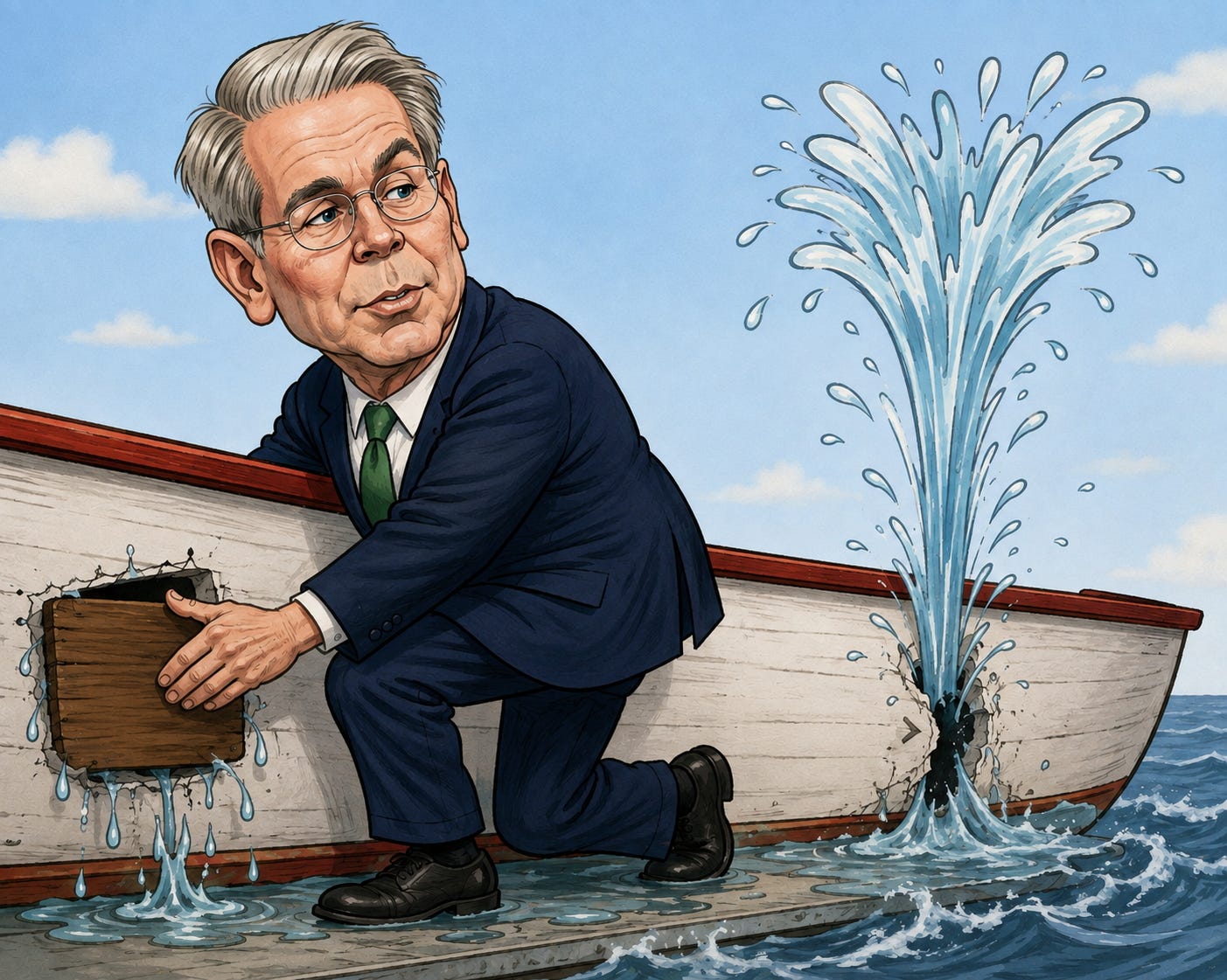
At the same time, issue too many bills and you raise the risk of funding hiccups, ultimately forcing more RMP that risks being interpreted as QE which spurs the inflation story and currency debasement trade again.
And you see some of that risk being priced today - U.S. dollar selling off while gold rallies.
What’s Next?
I’ve been asked whether or not there’s a 30y yield level that becomes concerning but I think it has just as much to do with the price action. If we see yields start to gap 10bps at a time in quick succession, this is a sign that the Fed or Treasury will likely need to take further action. The last resort of saving the long-end is by hiking enough to dampen forward growth and inflation expectations, hitting equities and driving flows into the bond market.
When considering the 30y yield level that’s concerning for equities, I would say that we’re already there. The US 30y Treasury yield is around 5.20%. The Real Yield, which is the amount left over after inflation, sits around 3%, and can be obtained by buying TIPS. When you compare that to the S&P 500 Earnings Yield of 3.8% (which will be eaten into by inflation), the pull to shift your allocation heavier into long bonds becomes extremely compelling.
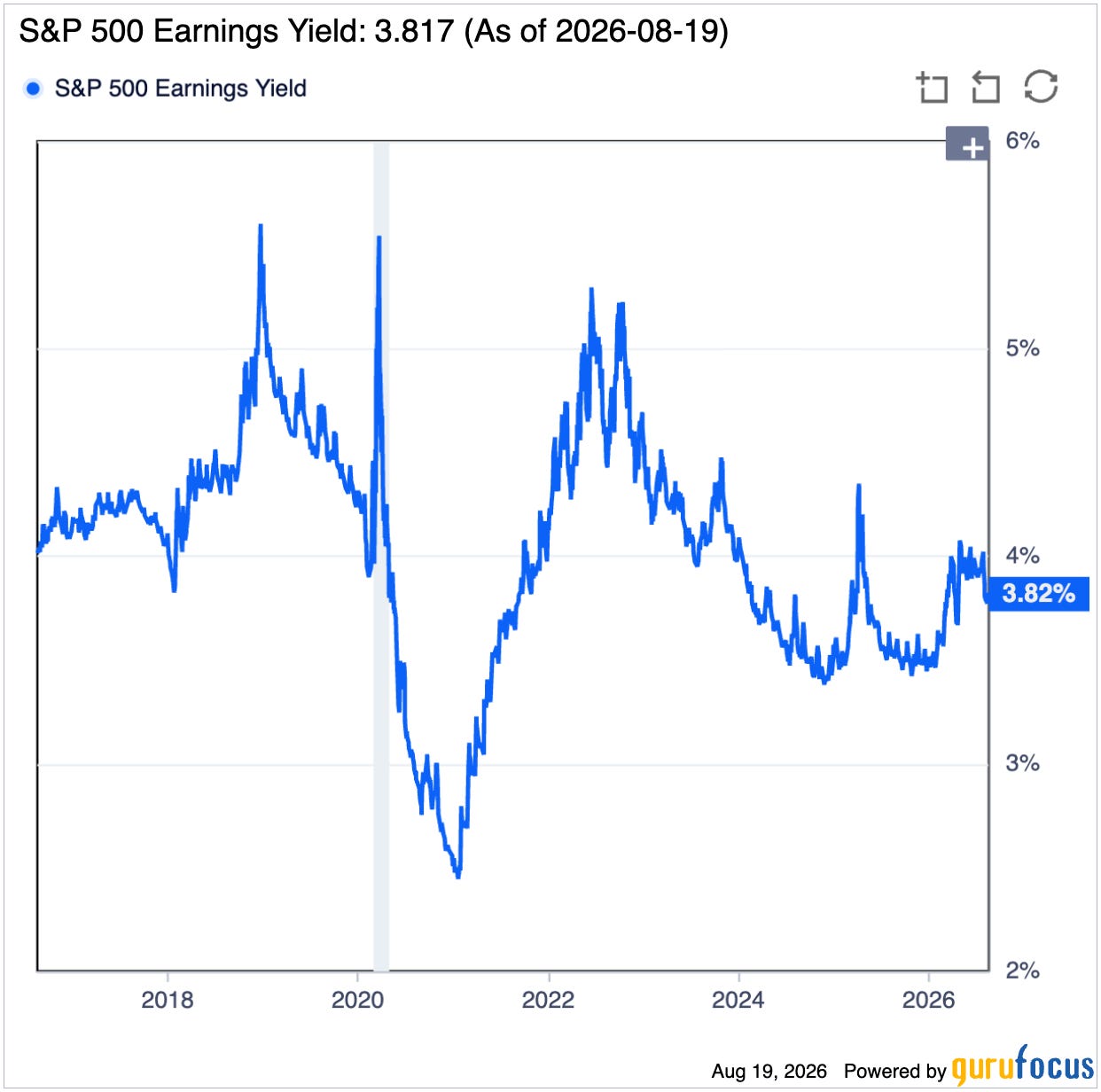
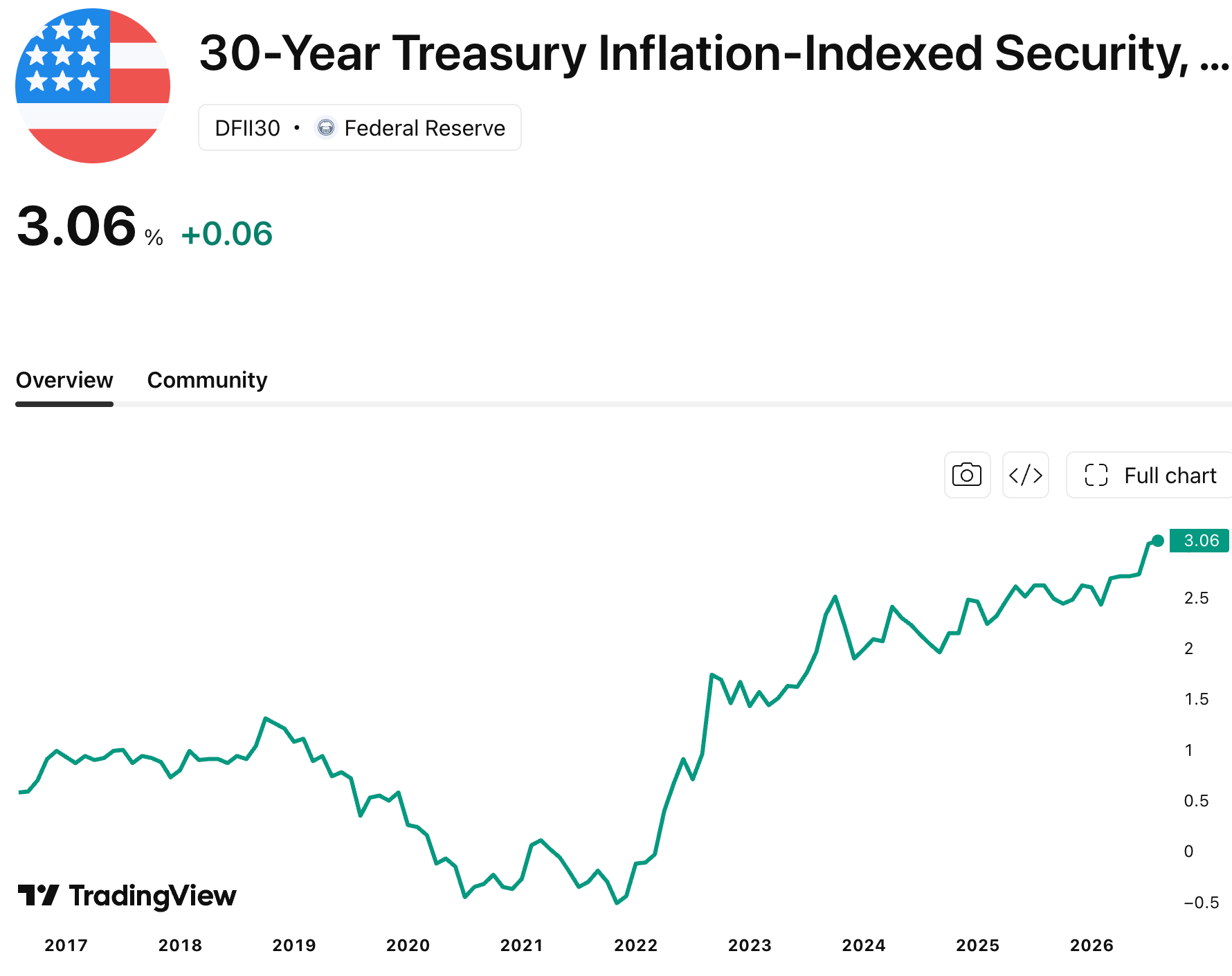
For now, the effect of Bessent’s actions is stimulative (or arguably “less restrictive”) - and you’re seeing a clear signal of intent by Bessent that he will step in to hold yields down if needed. The recent subdued inflation print has given him enough cover to do this for now but a hotter inflation print raises the likelihood of further action. More buybacks, more inflation, higher yields, more buybacks, and the cycle continues. The release valves become the dollar (down) and gold (up).
The dollar down move is compounded by crowded hedge fund positioning in USD longs. When we look at the COT report we can see that long dollar HF positioning has been near multi-year highs.
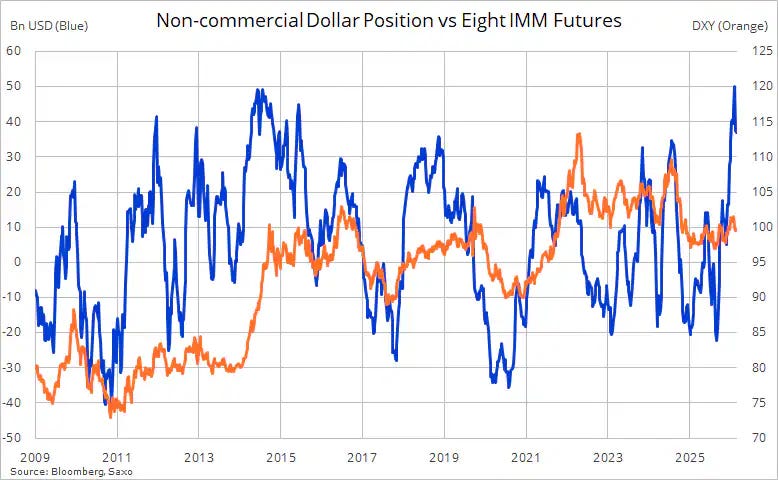
The HF rationale makes sense, inflation sitting above target with Warsh reinforcing the 2% target repeatedly but a market that doesn’t believe we’ll get hikes, a U.S. Iran tail that seems underpriced even as Brent goes past $90, long end yields continually rising with Fed tightening the potential structural fix.. but while all these things could turn out to be the right asymmetric view, crowded positioning tends to get flushed out against a narrative turn like this particularly in a month like August.
As always, I’ll continue to stay active in the subscriber chat and update with anything that I see. If you haven’t joined us already, please do.
This is not financial advice. Always do your own research.
< My macro deep dives, stock specific analysis, and personal positioning are usually paywalled and prices will continue to rise over time to reward my earliest subscribers. If you want to be the first to see them or support my work in general please consider upgrading to a paid subscription. Students get 50% off - please use this link. >
What is your thoughts on how this will affect the low coupon assets as there principle value is lost more than a quarter of the face value. And the leveraged positions of major Japanese insurance companies can cause a big issue if a sell off is triggered .